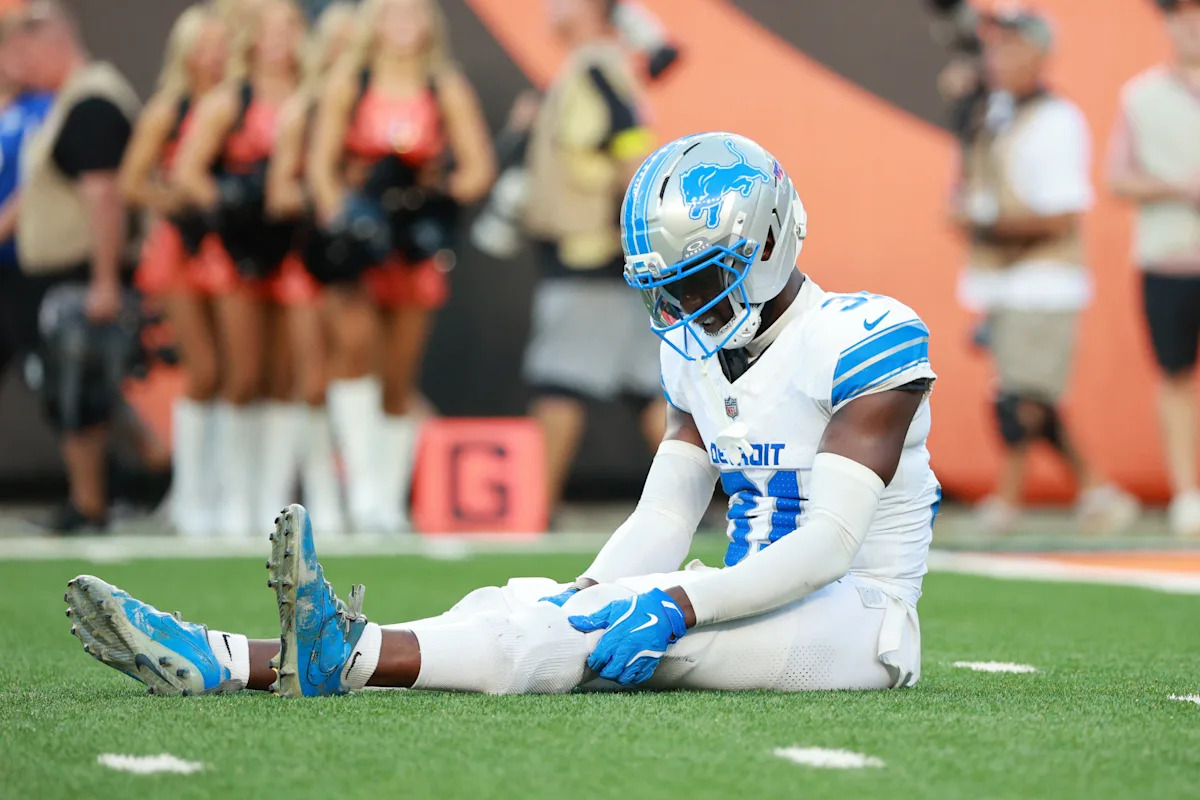
Lions Star Kerby Joseph Injury: A Doctor's Perspective on a Team's Challenge
The Detroit Lions, a team constantly under the spotlight, face the perennial challenge of maintaining peak player health amidst the brutal demands of professional football. When a lions star, such as safety Kerby Joseph, goes down with an injury, it sends ripples of concern through the fan base and front office alike. While specific details about Joseph's most recent injury have been scarce, understanding the potential impact and a doctor's typical reaction to such a scenario offers invaluable insight into the world of elite sports medicine and team management. Every lions star injury isn't just a physical setback for the player; it's a strategic blow for the team, requiring swift, informed decisions.
Decoding a Hypothetical Kerby Joseph Injury: A Doctor's View on Recovery
Given the lack of public specifics regarding Kerby Joseph's recent ailment, let's explore a common scenario for a dynamic safety and a doctor's typical approach. Imagine Joseph, known for his speed and hard-hitting plays, sustained a Grade 2 hamstring strain during a high-speed pursuit. A Grade 2 strain signifies a partial tear of the muscle fibers, causing moderate pain, swelling, and a noticeable loss of strength and flexibility. For an athlete like Joseph, whose game relies heavily on explosive movements, this is a significant setback.
A sports medicine physician's initial reaction would focus on immediate assessment and accurate diagnosis. This typically involves a thorough physical examination, evaluating the range of motion, tenderness, and muscle strength. An MRI would likely be ordered to confirm the diagnosis, determine the exact location and severity of the tear, and rule out any other concurrent injuries. The diagnostic phase is crucial; misdiagnosis or underestimating the severity can lead to prolonged recovery or re-injury.
Following diagnosis, the treatment protocol would begin with RICE (Rest, Ice, Compression, Elevation) in the acute phase, often accompanied by anti-inflammatory medication. Rehabilitation would then progress through several stages:
- Phase 1 (Pain and Swelling Management): Focus on gentle stretching, electrical stimulation, and avoiding activities that aggravate the injury.
- Phase 2 (Restoration of Flexibility and Strength): Incorporating eccentric exercises, resistance training, and progressive stretching to rebuild muscle integrity.
- Phase 3 (Sport-Specific Training): Gradual return to running, agility drills, and ultimately, contact drills, closely monitored by the medical and training staff.
For a Grade 2 hamstring strain in an elite athlete, a typical return-to-play timeline could range from 4 to 8 weeks, though individual healing rates vary significantly. Factors like Joseph's age, previous injury history, and adherence to rehab protocols all play a role. The doctor's primary goal isn't just a return to play, but a return to *peak performance* with minimized risk of recurrence, which often involves extensive biomechanical analysis and movement retraining.
The Ripple Effect: How Star Injuries Impact Team Dynamics and Strategy
The injury of a key player like Kerby Joseph isn't merely a health issue; it's a strategic challenge that reverberates through the entire organization. For the Detroit Lions, Joseph's presence in the secondary is critical for their defensive schemes, communication, and overall playmaking ability. His absence forces coaches to adjust game plans, potentially simplifying defensive coverages or relying more heavily on less experienced players.
Beyond the X's and O's, a lions star injury can have a psychological impact. Teammates might feel the pressure to compensate, and team morale can be affected. From a front-office perspective, it necessitates roster adjustments, potential call-ups from the practice squad, or even exploring free-agent options, all of which carry financial and strategic implications. The depth of a roster is truly tested when its stars are sidelined, highlighting the importance of robust player development and contingency planning.
The Onwuzurike Saga: A Deep Dive into Contract Controversies and Complex Recoveries
The Lions' recent history is replete with complex injury narratives, none more intricate than that of defensive tackle Levi Onwuzurike. His situation offers a stark reminder of the financial and contractual complexities intertwined with player health. Originally expected to hit free agency, Onwuzurike remains surprisingly under contract with the Lions through 2026, a result of obscure "tolling rules" tied to his inability to perform due to injury. This highlights how prolonged injury absences can extend a player's contractual obligations beyond typical expectations.
Onwuzurike's injury history is substantial:
- ACL Repair (2025 offseason): This surgery ended his 2025 season, keeping him on the Physically Unable to Perform (PUP) list. What's curious is the timing. Comments from Dan Campbell implied the ACL issue began in the 2024 season, possibly as a partial tear, with surgery decided a month or two after signing a new contract. This raises questions about how much the Lions knew prior to guaranteeing $3.5 million of his $4 million deal. A high guarantee typically suggests minimal injury concerns. If the Lions felt blindsided, it could severely strain the relationship, impacting future prospects with the team.
- L5-S1 Spinal Fusion (2022): This severe back surgery sidelined him for the entire 2022 season. His return is a testament to his resilience, as he might be only the second NFL player in history to recover and play after such a procedure. However, the long-term reliability and re-injury concerns remain a significant factor for a player who will be 28 entering the 2026 season.
The potential "rift" between Onwuzurike and the Lions stemming from the ACL timing underscores a critical aspect of sports management: transparency and trust between player, agent, and team medical staff. When information regarding an injury is perceived as withheld or mismanaged, it can have lasting consequences on a player's career trajectory within an organization. For an in-depth look at this contentious situation, read more in Levi Onwuzurike: Inside the Lions' ACL Contract Controversy.
Proactive Measures: Modern Sports Medicine in Injury Prevention
In the high-stakes world of professional sports, prevention is always better than cure. NFL teams invest heavily in state-of-the-art sports medicine and performance science to minimize the risk of a lions star injury. This includes:
- Advanced Screening and Biomechanical Analysis: Identifying muscular imbalances, movement deficiencies, and previous injury vulnerabilities through detailed assessments.
- Personalized Training Regimens: Tailoring strength and conditioning programs to address individual player needs, focusing on injury-prone areas like hamstrings, knees, and shoulders.
- Recovery Protocols: Utilizing cryotherapy, hydrotherapy, massage, and advanced nutrition to accelerate recovery, reduce inflammation, and prevent overuse injuries.
- Load Management: Carefully monitoring training intensity and volume to prevent overtraining and ensure players are adequately rested.
- Wearable Technology: Using devices to track physiological data, sleep patterns, and exertion levels to identify fatigue markers before they lead to injury.
Despite these sophisticated measures, injuries are an unavoidable part of football. The goal is to reduce their incidence and severity, and when they do occur, to ensure the fastest, safest return to play.
The Broader Injury Landscape: More Bad News for the Lions
The challenges for the Detroit Lions don't stop with Joseph or Onwuzurike. The "bad news keeps coming" for the team, as evidenced by injuries to other key athletes. While not directly NFL-related, the news of star Hugh McCluggage being sidelined with a calf strain serves as another example of how an unexpected setback to a prominent player can disrupt plans. While McCluggage plays in the AFL, the sentiment perfectly mirrors the ongoing battle against injuries that NFL teams, including the Lions, constantly face. Every lions star injury, regardless of the sport, underscores the fragility of athletic performance and the immense challenge of maintaining a healthy roster. For more on this specific setback, see Hugh McCluggage Calf Strain Adds to Detroit Lions Injury List.
Conclusion: Navigating the Complexities of Star Player Health
The reality of professional football is that a lions star injury is more than just a momentary setback; it's a multi-faceted challenge encompassing medical, strategic, and financial dimensions. While Kerby Joseph's specific injury details remain private, a doctor's reaction highlights the rigorous process of diagnosis, treatment, and rehabilitation required for elite athletes. The complex saga of Levi Onwuzurike further illustrates the delicate balance between player health, contractual obligations, and team trust. Ultimately, the Detroit Lions' success hinges not only on their talent on the field but also on their ability to manage and mitigate the inevitable toll injuries take on their most valuable assets.